Notice a tall, narrow window with a fancy hood or a roof that slopes steeply at the top? On Capitol Hill, small details tell you a lot about a rowhouse’s age, layout, and what it might take to update it. If you are buying or selling here, recognizing styles helps you plan for permits, budgets, and resale. This quick guide shows you how to spot the most common looks, what they imply for living space and maintenance, and where to go for reliable rules and resources. Let’s dive in.
Why Capitol Hill looks this way
Capitol Hill grew fast from the mid‑1800s into the early 1900s as federal jobs expanded. Builders produced long runs of brick rowhouses with shared walls, narrow lots, and repeating cornice lines, then layered on style through window hoods, brackets, and door surrounds. The neighborhood is a designated historic district, which is why so many façades, stoops, and cornices remain intact.
For deeper historical context and style documentation, consult the National Register’s Capitol Hill Historic District records in the National Register of Historic Places database and local guides from the Capitol Hill Restoration Society.
Quick visual guide to rowhouse styles
Style cues often show up first at the roofline, windows, and entry. Many homes blend elements from multiple eras, so use several clues together.
Federal (late 1700s to 1830s)
- Look for: Flat or low roof behind a simple cornice, plain brick façade, and a fanlight or elliptical transom above the door.
- Layout hint: Narrow, stacked rooms with modest trim and a straightforward front‑to‑back sequence.
Greek Revival (circa 1825–1860)
- Look for: A stronger, classical cornice, pilasters framing the door, and rectangular transoms.
- Layout hint: Balanced, simple moldings with an emphasis on symmetry.
Italianate (1840s–1880s)
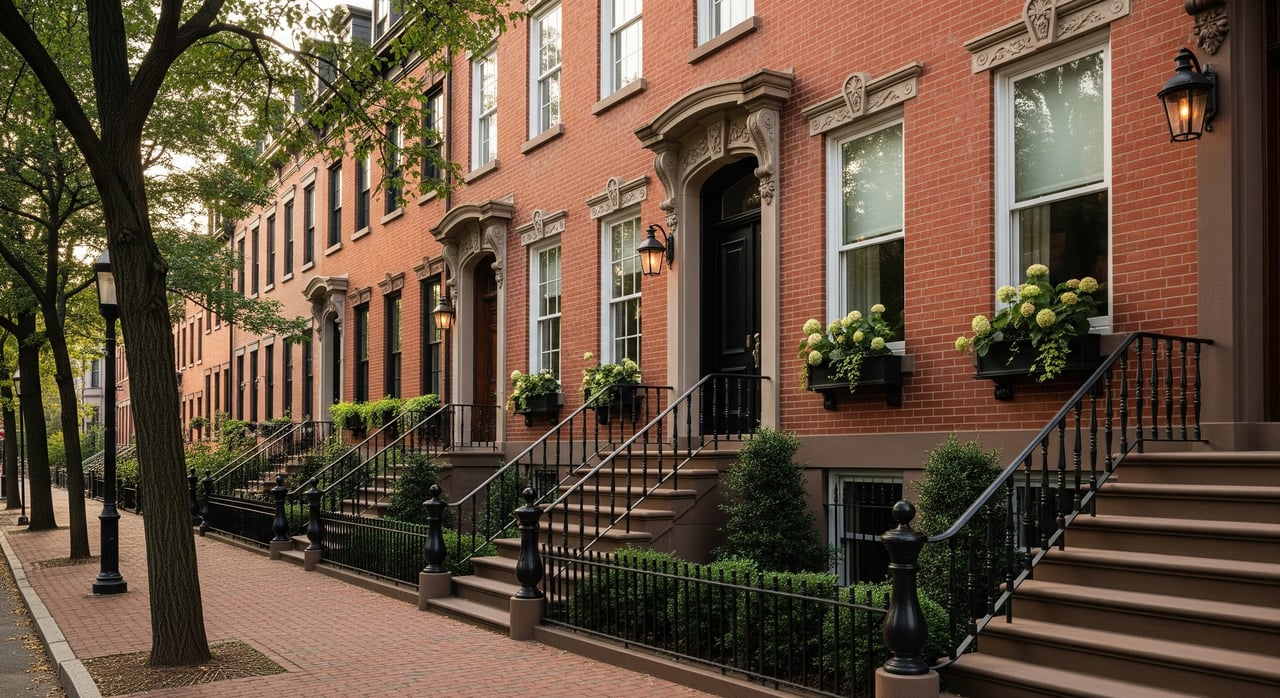
- Look for: Projecting bracketed cornice, tall narrow windows with arched or decorative hoods, and a stoop that leads to the parlor level.
- Layout hint: High ceilings and tall windows, often with ornate mantels and plaster details.
Second Empire (1860s–1880s)
- Look for: A mansard roof with dormer windows at the top. This roof shape is the giveaway.
- Layout hint: Similar to Italianate, but the mansard often creates usable top‑floor rooms.
Queen Anne / Late Victorian (1880s–1910)
- Look for: Asymmetry, rounded or projecting bays, patterned brick, and varied rooflines. Entries may be recessed.
- Layout hint: Irregular room shapes with decorative woodwork in higher‑style examples.
Colonial Revival (1890s–1940s)
- Look for: A return to classical symmetry with restrained brick details, paneled doors, and simple columns or pilasters.
- Layout hint: Traditional moldings and plans that feel more formal and orderly.
20th‑century infill (early 1900s and later)
- Look for: Simpler brick fronts and flat roofs with minimal ornament. Some rows reflect Bungalow or Colonial Revival touches.
- Layout hint: Efficient layouts with fewer decorative details.
Floorplans you will often see
- Stacked‑vertical plan: Rooms align front to back, with a front parlor, middle dining room, and rear kitchen. Bedrooms are above.
- Stoop vs English basement: A raised stoop usually means the main parlor is a level up. An English basement often has a separate entry at garden level.
- Rear structures: Some lots have alley houses or small rear buildings. These may be storage, parking, or converted spaces depending on permits.
Renovations, permits, and preservation
Capitol Hill is in a historic district. Exterior work that is visible from the street or alley often requires review. Start by checking the D.C. Historic Preservation Office for district maps, review guidance, and application steps.
Projects that commonly need review or permits include rooftop decks that are visible from public spaces, window or door replacements, visible additions, and any major façade change. The Department of Buildings handles permits for structural, electrical, plumbing, and mechanical work, and the D.C. Office of Zoning addresses setbacks, lot occupancy, and special exceptions. Local guidance and homeowner‑friendly tips are available through the Capitol Hill Restoration Society.
Practical tips:
- Plan timelines with review in mind. Historic review can add weeks to months.
- Favor compatible designs. Rear additions, in‑kind window repairs, and set‑back rooftop decks are more likely to move smoothly.
- Keep documentation. Permitted, code‑compliant work protects your resale and simplifies buyer due diligence.
Maintenance to expect with historic brick
- Masonry: Tuckpointing and mortar matching matter. Historic brick needs the right mortar to avoid damage.
- Water: Watch for moisture in basements and at rooflines. Waterproofing and good drainage go a long way.
- Roofs and cornices: Bracketed cornices and narrow roofs need periodic inspection and specialized repair.
- Systems: Older homes often benefit from upgraded HVAC, electrical, and plumbing. Basements with finished spaces need proper egress and mechanicals.
The Library of Congress HABS collection has excellent photos and drawings that show how details and assemblies were originally built.
Buyer cheat sheet
- Use the roofline and window shapes to date the house quickly. Mansard equals Second Empire. Bracketed cornice and tall, narrow windows often mean Italianate. Asymmetrical bays point to Queen Anne.
- Ask for the renovation history. Look for permits, contractor invoices, and any waterproofing or structural work.
- Verify basement apartments. Legal status depends on permits, egress, ceiling height, and the certificate of occupancy.
Seller cheat sheet
- Lead with character. Note style and intact features like cornices, mantels, and original brickwork in your listing.
- Gather proof. Collect permits, warranties, and documentation for roof, systems, and structural repairs.
- Anticipate questions. Buyers may ask about window replacements, rooftop decks, or additions and whether they were reviewed and permitted.
Style spotting quick cues
- Roof and cornice: Brackets suggest Italianate. A mansard roof means Second Empire. Varied, playful rooflines often signal Queen Anne.
- Windows and doors: Tall and narrow with arched hoods point to Italianate. Fanlights and simple trim suggest Federal or early Greek Revival.
- Entry and stairs: A tall stoop often indicates a mid‑19th‑century plan with a raised parlor level.
Need a plan for your Capitol Hill move?
Whether you are weighing a renovation, preparing to list, or trying to read a façade on a Saturday walkthrough, you deserve clear, local guidance. Our team helps you make sense of style, navigate permits, and position your home for success with streamlined prep and proven marketing. When you are ready, reach out to Treasury Homes for a practical, step‑by‑step plan for your next move.
FAQs
How do I confirm if a Capitol Hill house is in the historic district?
- Check with the D.C. Historic Preservation Office for district maps and property status; exterior changes visible from the street or alley often require review.
Can I add a rooftop deck on a Capitol Hill rowhouse?
- Possibly, but visibility from public spaces triggers review. Designs set back from the front and that meet zoning rules typically fare better during review by city agencies.
Are Capitol Hill rowhouses mostly single family or multi‑unit?
- Many began as single‑family homes, though some now include legal accessory units or multi‑unit conversions; confirm the certificate of occupancy and permit history.
Do historic details increase maintenance costs?
- Yes. Expect periodic tuckpointing, cornice upkeep, and targeted wood or metal repairs, along with regular roof and water management checks.
Where can I find reliable architectural photos and plans?
- Explore the Library of Congress HABS collection for photos and measured drawings, and consult the Capitol Hill Restoration Society for local research and guides.